The operating challenge
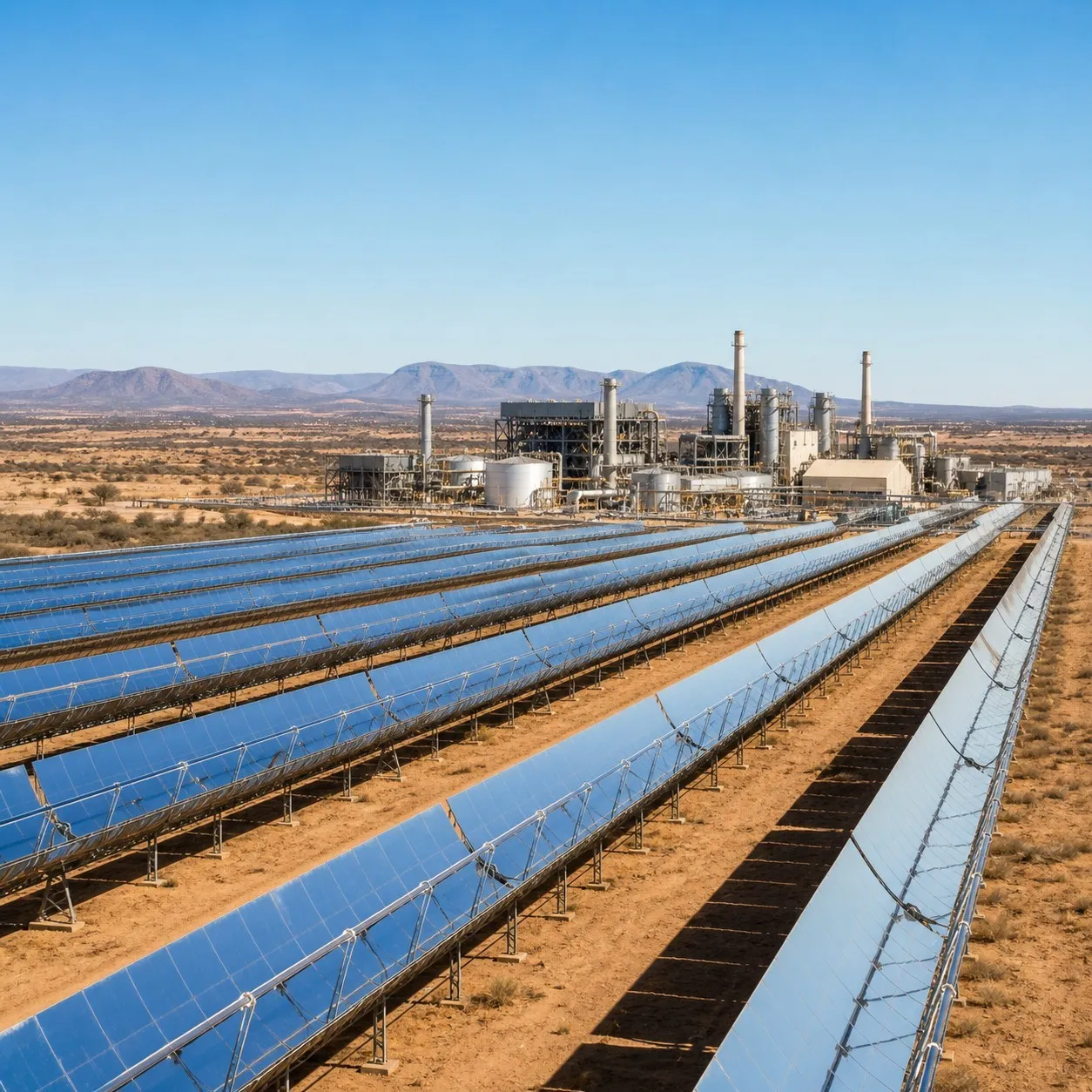
Emvelo had already achieved something remarkable with Ilanga CSP-1: a 100MW concentrated solar power plant capable of powering more than 100,000 homes. But their ambition did not stop there. To make the biggest possible impact, both financially and environmentally, the plant needed to deliver more output during the evening, when South Africa's grid is under the greatest demand.
Achieving that goal was far from simple. Running a concentrated solar power plant is a delicate balancing act, with operators constantly making complex decisions. They needed a better way to manage the trade-offs between energy storage, generation and unpredictable weather.
The main questions were when to use captured heat, when to store it in molten salt tanks for after sunset, and how to plan generation around changing weather and the value of electricity at different times.
Research and a usable data foundation
We started with a paid research phase to test whether machine learning and optimisation could improve those decisions. Ilanga CSP-1 produces high-resolution readings from more than a thousand sensors. The data was stored in a proprietary format that made it difficult to query and analyse, so we transformed it into a cloud-based data lake on Amazon S3.
With that foundation in place, we built a digital model of the plant. A recurrent neural network worked alongside engineering models of heat capture, storage and turbine operation. This let us test operating strategies against historical conditions and understand which constraints a useful recommendation would need to respect.
This collaboration has shown how AI can give clean energy operators the confidence to get more from every ray of sunshine.
Emvelo Team
Building the decision-support system
The next stage turned the research into working software. We built a revenue optimiser that compares possible flow schedules in ten-minute intervals, using plant and commercial constraints to recommend how heat could be stored or used for generation.
The system combines plant telemetry, weather information, forecasts and the optimisation model. Tracked cloud jobs run the modelling work, while authenticated access and export tools support an operator workflow. The result is a specific recommendation that can be examined alongside the conditions and assumptions behind it, rather than an unexplained instruction to change how the plant runs.
An interface for operator review
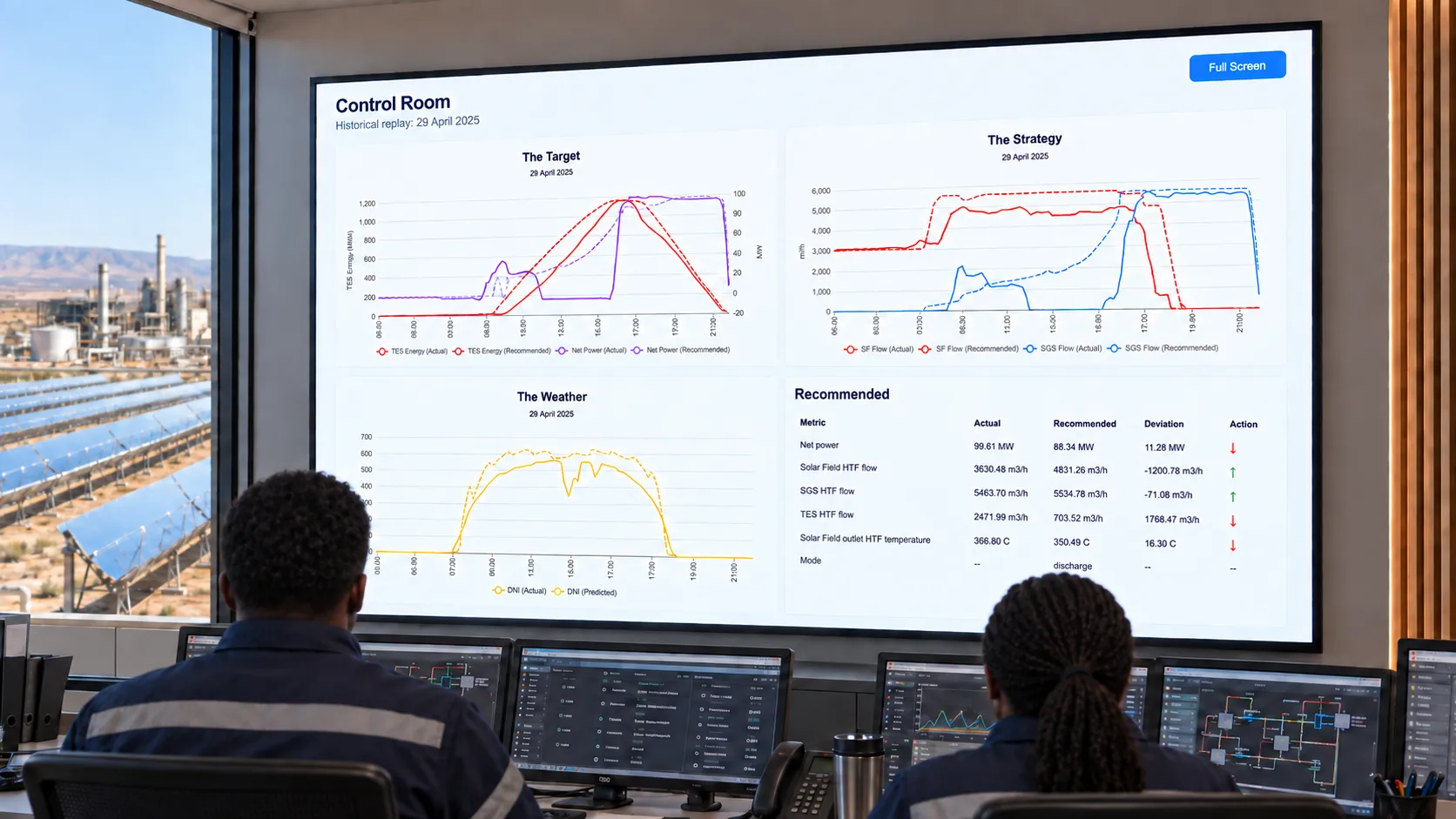
The operator interface brings together actual and recommended performance with weather context. It supports forecast review, historical comparison and schedule exports. Plant staff can examine recommendations before deciding what action, if any, to take. The image below illustrates how the interface could be viewed in a control room.
What the evaluation showed
In an evaluation using 162 days of historical plant data, the optimiser indicated about 5.4% modelled revenue uplift against an expected baseline. That is a result of historical modelling, not a measured increase in plant revenue.
The work established more than a promising model. It produced an operator decision-support system that brings data preparation, forecasting, optimisation and a reviewable interface into one workflow. It gives Emvelo a concrete way to examine operating choices and assess the value of the recommendations with its plant team.