Understand
We review your goals, speak to stakeholders and users, and examine existing workflows. You get research findings and a shared view of the problems worth solving.
DabApps designs digital products around real users and workflows. We help teams shape new products and improve existing software through discovery, user research, UX/UI design and app design, with experience spanning NHS therapy tools, travel prototypes and operational dashboards.
A product can have all the right features and still be hard to use. Customers may struggle to find the next step, staff may repeat work across screens, or a growing interface may become difficult to learn. Good design makes those tasks clearer and helps people understand what happens next.
We work with founders, product leaders and operational teams to understand the problem, explore possible solutions and decide where to focus. Research and prototypes help you test assumptions before investing in a build, or identify improvements to software people already rely on.
WHAT WE DELIVER
DabApps combines discovery, UX and interface design to define how a digital product should work. We agree the outputs around your next decision, whether that's choosing a first release, testing a difficult workflow or preparing detailed designs for development.
COMMON STARTING POINTS
You might have an idea with unanswered questions, an app people find confusing or a platform that has outgrown its original interface. We start with the decisions you need to make and the evidence you already have, then plan the research and design work that will help.
We review your goals, speak to stakeholders and users, and examine existing workflows. You get research findings and a shared view of the problems worth solving.
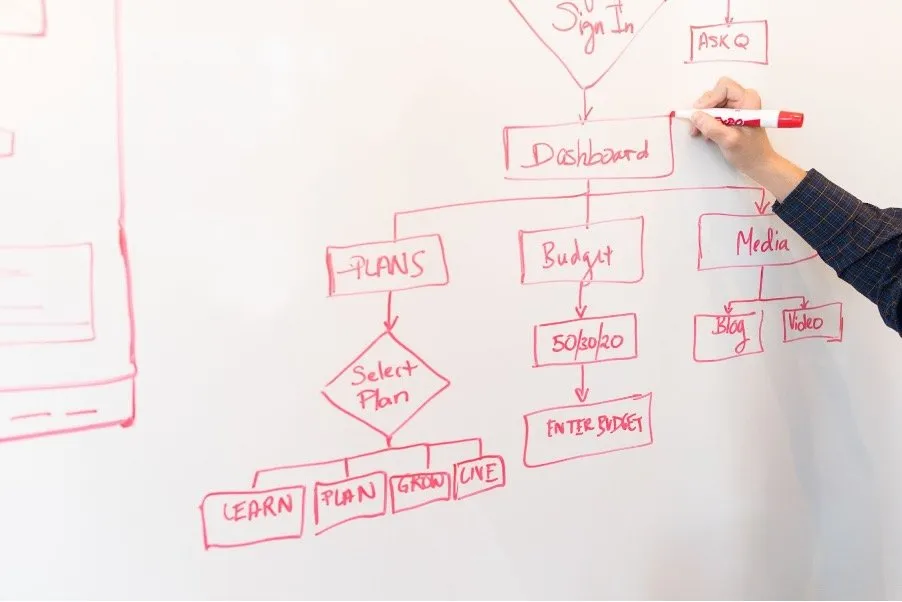
We map journeys and use wireframes to compare possible approaches. You get a proposed scope and a prototype that makes the key interactions tangible.
We put the prototype in front of users to check understanding and task completion. Findings guide revised workflows and priorities before detailed design and development.
We develop interface designs, reusable patterns and guidance for engineers, including error states and accessibility considerations. Design and engineering stay connected as the product is built and improved.
WHY DABAPPS
For Take Me to the Moon, research shifted an AI journey-builder idea towards a mobile companion prototype with routes to human support. For Sussex Voices Clinic, we worked with clinicians and researchers on a calmer, clearer therapy app. That experience helps us connect design decisions to the people using the product and the engineering needed to deliver it.
These projects show how research and prototyping shape what to build, and how interface design helps different users work with complex information.

We helped a specialist travel team imagine a more personal digital journey: a mobile companion prototype combining itineraries with access to human support.

We rebuilt the Choices app with clinicians to help people who hear voices practise therapy exercises, keeping sensitive information on their device.

Glow helps Firefly investigate equipment remotely, reducing travel, while customers can check performance, CO2 and fuel savings themselves.
“Glow has changed how we manage and showcase our hybrid power systems. We can support sites remotely, and customers can clearly see the CO2 and fuel savings for themselves.”
Andy Mead, CEO at Firefly
When AI is part of a product, users need to understand what an output means, where it may be uncertain and what they can do next. We design how results are presented and reviewed, when approval is needed, and how people can correct an answer, recover from failure or reach human support.
These are product design decisions. We consider them alongside the wider workflow, permissions and interface, working with engineers to make the behaviour and its limits clear. The aim is to help people use AI with appropriate confidence while keeping responsibility for important decisions visible.
Digital product design connects user needs and business goals to the way software works. UX design covers journeys, workflows and interactions; UI design covers the screens, content and visual patterns people use. DabApps brings these together with research, prototyping and testing for web and mobile products.
Yes. We start with the tasks people need to complete, review the existing experience and identify where they get stuck. We can test changes to individual workflows or plan a wider redesign, keeping useful behaviour and engineering constraints in view.
Yes. An engagement can focus on understanding the problem and testing a proposed approach before you commit to development. We agree the research, prototype and recommendations you need to make that decision. A prototype demonstrates interactions; it is not a finished, production-ready application.
Our designers and engineers consider feasibility, data, permissions and edge cases together. Interface designs and reusable patterns guide implementation, and we review the experience as it is built. We make trade-offs between delivery speed and long-term consistency explicit.
The starting point, number of user groups, complexity of workflows and access to research participants all affect the work. We agree which questions need answering, what to test and which design deliverables will support your next stage, then scope the engagement around those priorities.
Liv Dykes explains what different stages of prototyping help you learn. Mark Aaron explores how AI changes interaction design and the collaboration between designers and engineers.